A 50 kg bag is the standard unit cement is sold in, and its price on any given day depends on four things stacked together: the type of cement (OPC 43, OPC 53, PPC or PSC), the brand, how many bags you are buying, and where the bag needs to reach you. There is no single fixed "cement price," only a range that shifts week to week, so treat any number you hear from a neighbour or a WhatsApp forward as a starting point, not a quote, and check today's live prices on Clyft before you commit to a bulk order.
What Decides the Price of a Cement Bag?
Five factors combine to set what you pay per bag.
- Type of cement. OPC 53 grade is generally the most expensive of the common grades, since it is manufactured to a higher minimum strength and gains strength faster. PPC is usually a little cheaper than OPC 53, because it replaces part of the clinker with fly ash, a lower-cost input. OPC 43 typically sits between the two. PSC pricing varies by plant depending on slag availability.
- Brand tier. National brands with heavy advertising and consistent quality control usually price a notch above regional or state-level brands, even for the same grade of cement.
- GST. Cement attracts 28 percent GST, one of the highest slabs in the entire construction materials category, and this is baked into every quoted price whether the seller shows it separately or not.
- Transport and delivery. Cement is heavy and bulky. The cost of getting bags from the plant or godown to your site, fuel, tolls, loading and unloading labour, adds up, and it varies with how far your site is from the nearest stocking point.
- Order quantity. Buying a handful of bags at a local hardware shop almost always costs more per bag than ordering a truckload for a slab pour, since bulk orders spread the dealer's fixed costs over more bags.
Which Cement Brands Are Sold in India?
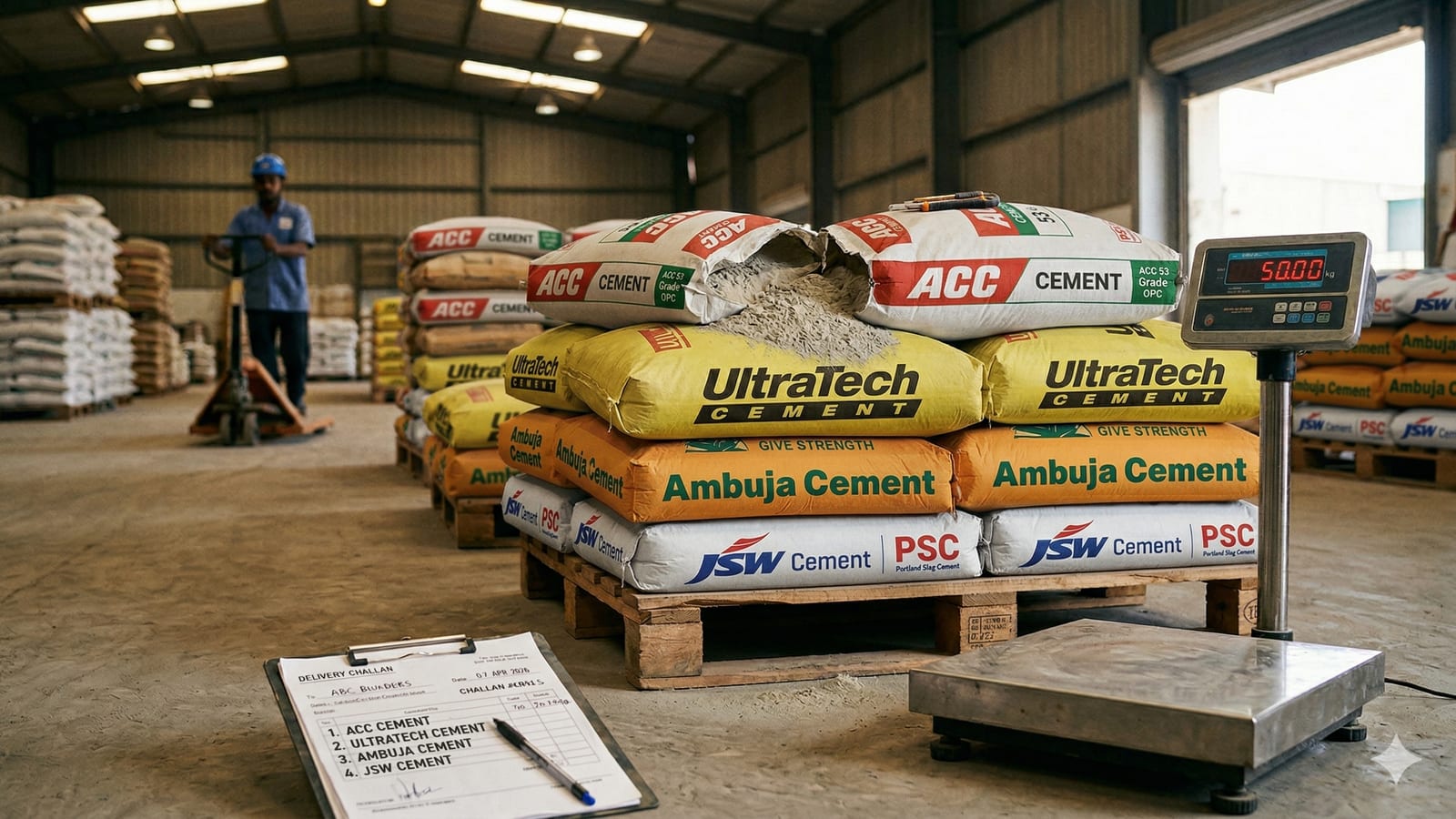
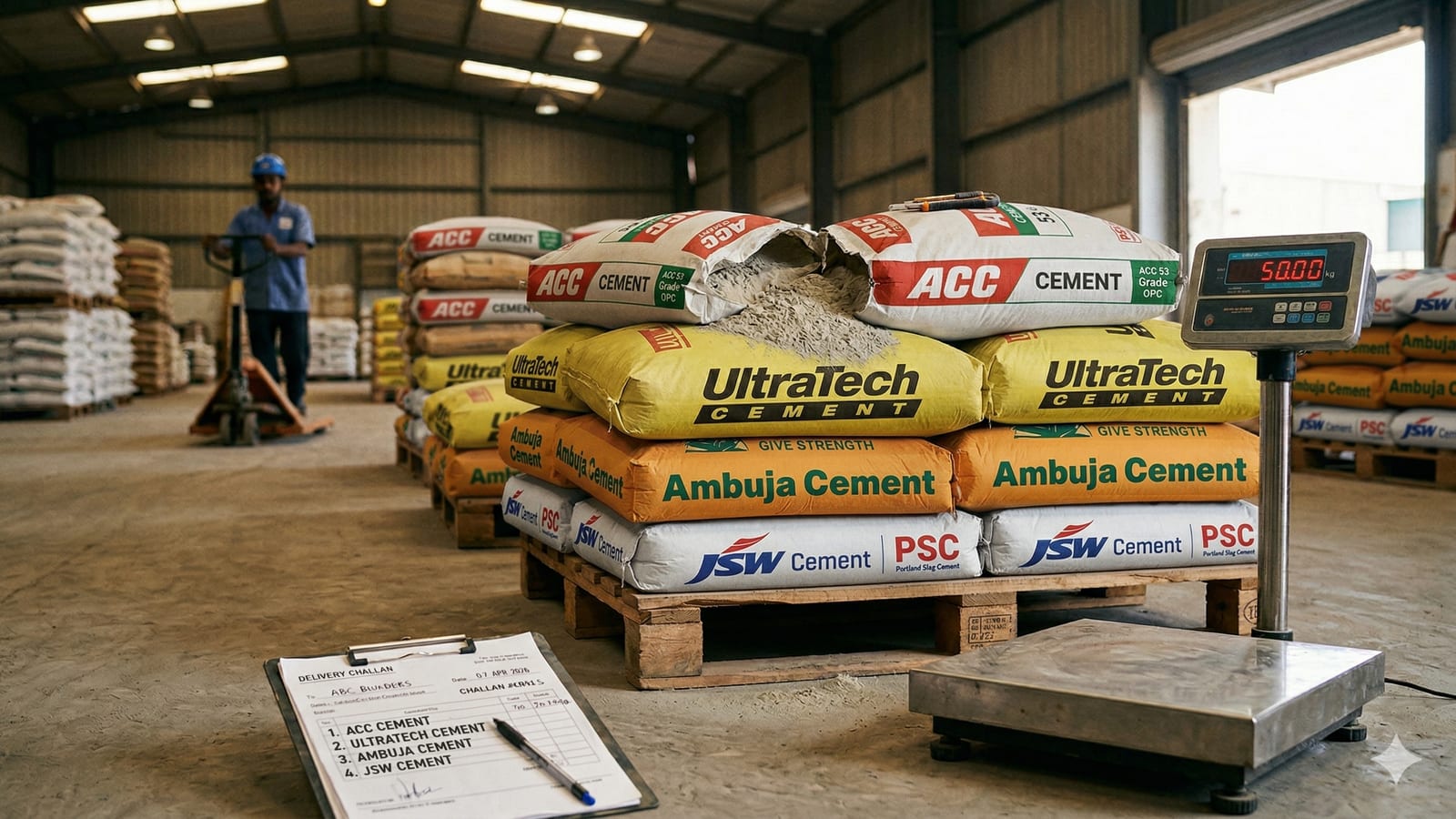
India's cement market is served by a mix of national majors and strong regional players, which is good news for buyers because it means real competition on price. The brands most commonly available include UltraTech, ACC, Ambuja, Dalmia, JSW, Ramco, Zuari, Bharathi, Maha, Priya and Nagarjuna. Not every brand stocks every grade in every region, so it is worth checking availability before you plan a large pour around one specific brand.
Here is how the major brands compare on what they offer, with live pricing a click away rather than guessed:
| Brand | Type available | Bag | Live price |
|---|---|---|---|
| UltraTech | OPC 43, OPC 53, PPC | 50 kg | See on Clyft |
| ACC | OPC 43, PPC | 50 kg | See on Clyft |
| Ambuja | OPC 43, PPC | 50 kg | See on Clyft |
| Dalmia | OPC 43, PPC, PSC | 50 kg | See on Clyft |
| JSW | PPC, PSC | 50 kg | See on Clyft |
| Ramco | OPC 53, PPC | 50 kg | See on Clyft |
Regional brands such as Zuari, Bharathi, Maha, Priya and Nagarjuna are also stocked widely in many states, and they are often worth comparing against the national names for the same grade, since the underlying IS-code requirements are identical regardless of brand.
Is PPC or OPC 53 Cheaper?
For the same tonnage of cement, PPC is usually priced a little below OPC 53. The reason comes down to raw materials: PPC blends OPC clinker with fly ash, a by-product of coal power plants that costs less to procure and process than clinker alone, while OPC 53 uses a higher proportion of clinker and is manufactured to a tighter strength specification. This is one reason PPC has become the default cement for general residential construction, plastering and brickwork in most parts of the country, with OPC 53 reserved for structural RCC elements where the mix design specifically calls for it. If your engineer has not specified a grade, do not assume the cheaper option is automatically right for every part of the house. See our OPC vs PPC vs PSC comparison for where each grade actually belongs in a build.
Why Do Cement Prices Swing Week to Week?
Cement pricing in India is not static, and three forces drive most of the movement.
- Mill and plant rates. Cement companies revise ex-factory rates periodically based on input costs such as limestone, coal and power, and these revisions ripple down to dealer and retail prices within days.
- Seasonal demand. Demand typically dips during the monsoon months, when fewer sites pour concrete, and picks up sharply in the post-monsoon and pre-summer construction windows. Dealers often adjust margins to match this demand curve.
- Diesel and freight costs. Since cement is transported by road from plants or regional godowns, any change in diesel prices shows up quickly in delivered cost, especially for sites further from regional stocking hubs.
Because these three factors move independently of each other, the only way to know the real price on the day you are buying is to check current rates rather than rely on a figure that was accurate a month ago.
How Can You Buy Cement Cheaper?
A few habits consistently save money on a cement bill without compromising on quality:
- Buy in bulk where possible. Ordering enough bags for an entire slab or a full floor's construction in one go, rather than in small batches, usually brings down the per-bag price and cuts the number of separate delivery charges you pay.
- Compare brands within the same grade. Since IS codes fix the minimum performance standard for a given grade regardless of brand, there is little technical reason to pay a premium for one OPC 53 bag over another unless a specific site condition calls for a particular brand's additional certification.
- Buy direct where you can. Traditional retail chains often pass cement through two or three layers of margin, from plant to distributor to local dealer, before it reaches you. Buying direct from a platform like Clyft that sources from manufacturers cuts out several of those layers, which is one of the more reliable ways to lower your effective cost per bag without switching to a lower grade than your build needs.
- Time large pours sensibly. If your schedule has flexibility, avoid ordering the bulk of your cement during the shortest-supply weeks of peak construction season, when dealer margins tend to be least negotiable.
A Quick Checklist Before You Order
Before placing a bulk cement order, confirm the grade your structural engineer or contractor has specified, check the manufacturing date on sample bags to avoid old stock, and compare per-bag pricing across at least two or three brands of the same grade rather than settling on the first quote. Factor in delivery cost to your specific site, not just the sticker price at the shop, since transport can change which option is actually cheaper. For the full range of brands and grades with current pricing, check today's live prices on Clyft, or browse all products for everything else your site needs.