Cement is the single most important material in your build, and buying the wrong type or a stale batch quietly weakens everything above it. This guide covers the cement types sold in India, what the grade numbers mean, the Indian Standard (IS) codes to look for, what moves the price, and how to work out how many bags you actually need.
Quick answer: which cement for what
| Cement type | Common grade | Best used for |
|---|---|---|
| OPC (Ordinary Portland) | 43 | General RCC, slabs, most house work |
| OPC (Ordinary Portland) | 53 | Columns, beams, high-load and precast members |
| PPC (Portland Pozzolana) | Blended | Plastering, brickwork, slabs, durable general use |
| PSC (Portland Slag) | Blended | Foundations, aggressive soils and coastal areas |
If you only remember one thing: PPC or OPC 43 handles most of a normal home, and you step up to OPC 53 only where the structural design calls for high early strength.
OPC vs PPC vs PSC
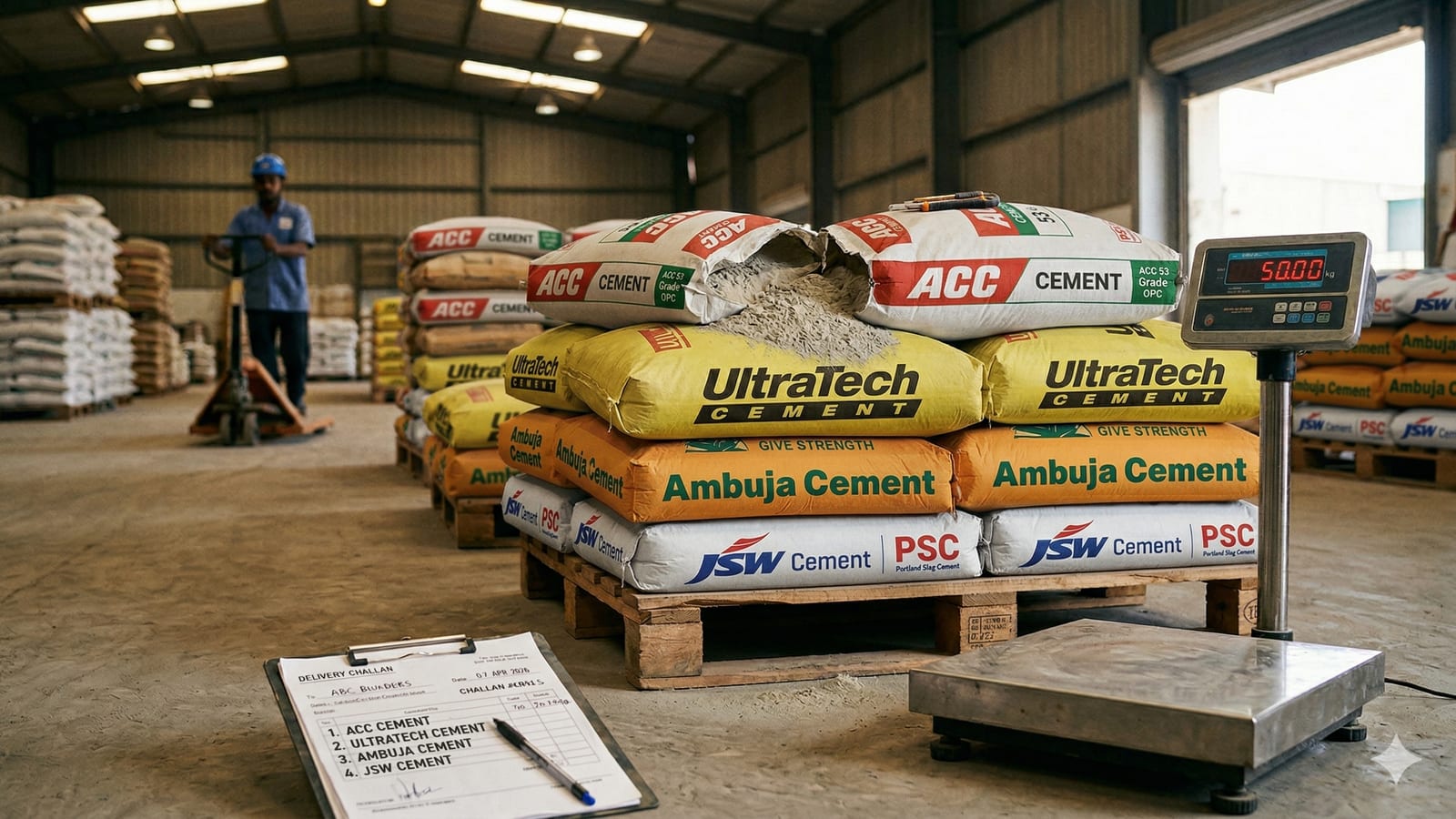
OPC (Ordinary Portland Cement) sets fast and gains strength quickly, which is why it is preferred for structural members and precast work. PPC (Portland Pozzolana Cement) blends OPC with fly ash, giving better workability, a smoother finish, lower heat of hydration and strong long-term durability, at a slightly slower early strength gain. PSC (Portland Slag Cement) blends in ground slag and resists chemical attack well, which makes it useful in foundations, sulphate soils and coastal work.
For a full side-by-side on strength, setting time and finish, read our detailed OPC vs PPC vs PSC cement comparison.
What the grade number means
The grade (33, 43, 53) is the minimum 28-day compressive strength in megapascals (MPa). OPC grades in India are covered by IS 269, and PPC by IS 1489. A higher number is not automatically better: OPC 53 develops heat and early strength that suit columns but can increase shrinkage cracking in mass concrete or plaster, where OPC 43 or PPC behaves better. Match the grade to the job, not to the biggest number.
How much cement you need
Work in volume, not guesswork. Measure the element (for a slab, area times thickness) to get cubic metres, then apply the mix:
- A nominal M20 mix (1:1.5:3) needs roughly 8 bags of cement per cubic metre of concrete.
- Plaster and brickwork use leaner mortar mixes (1:4 to 1:6), so the bag count per square metre is much lower.
Our concrete mix ratio guide gives the cement, sand and aggregate quantities for each grade so you can order the right number of bags and avoid both shortfalls and waste.
What affects the price
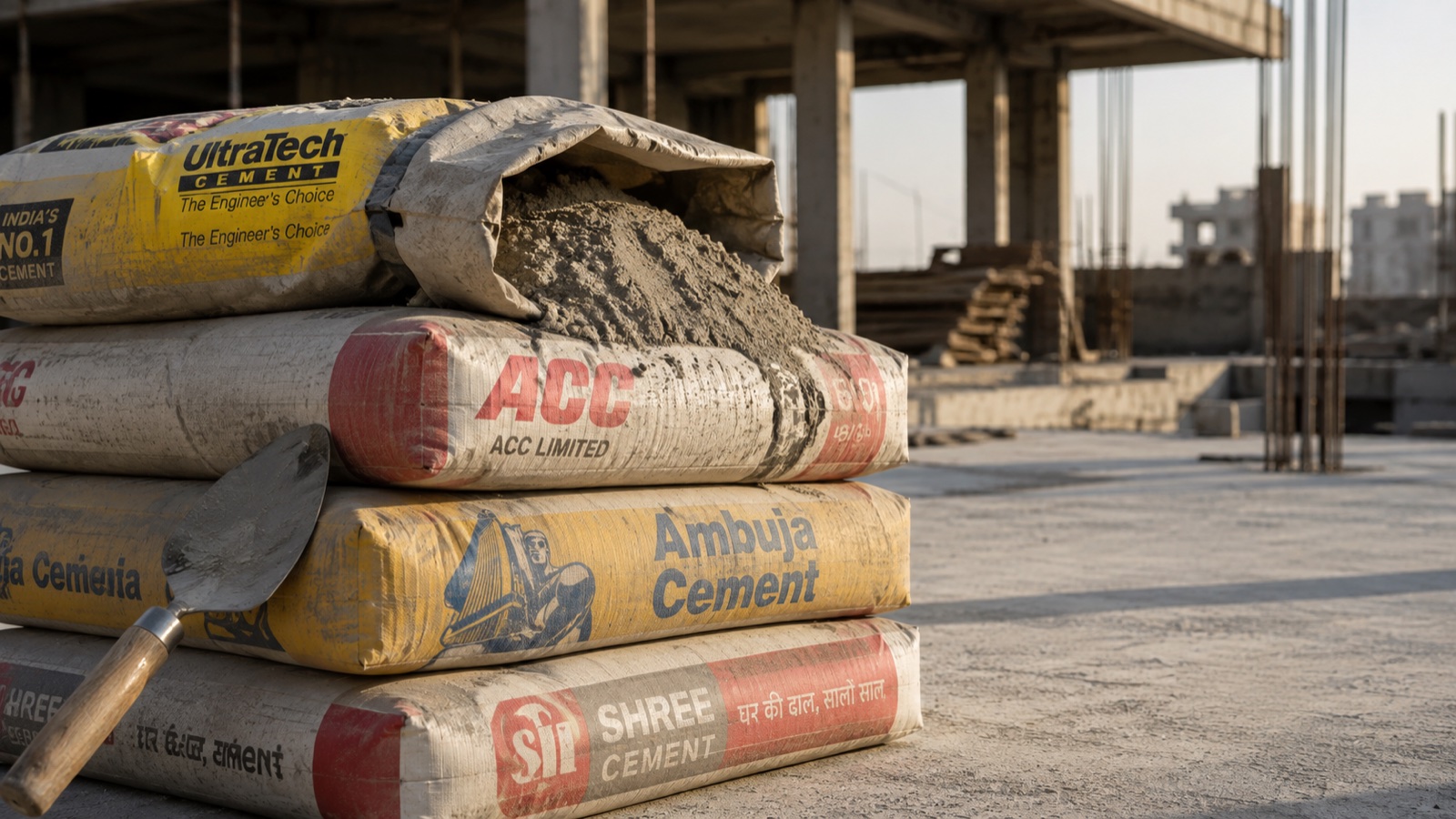
Cement is a bulk commodity, so its price moves with fuel and freight costs, coal and power prices, limestone availability, regional demand and the season (rates often firm up in the pre-monsoon building rush). Brand premium is real but smaller than most buyers assume once the grade and IS mark are the same. Our guide on what drives cement prices in India explains how to judge a fair rate rather than chase a brand.
Buying checklist
- Confirm the grade and IS mark printed on the bag matches what your work needs.
- Check the manufacture date: aim to use cement within 90 days.
- Reject bags that are lumpy or hardened; that cement has absorbed moisture.
- Store bags off the floor and away from walls in a dry, covered area.
- Order by calculated volume, with a small buffer, not by rounding up blindly.
Buy cement on Clyft
Clyft delivers branded cement direct from manufacturers across Hyderabad and up to 50 km around the city, usually within 24 hours, with no middleman markup. Browse live options and prices in the cement collection or open the Clyft app to order.