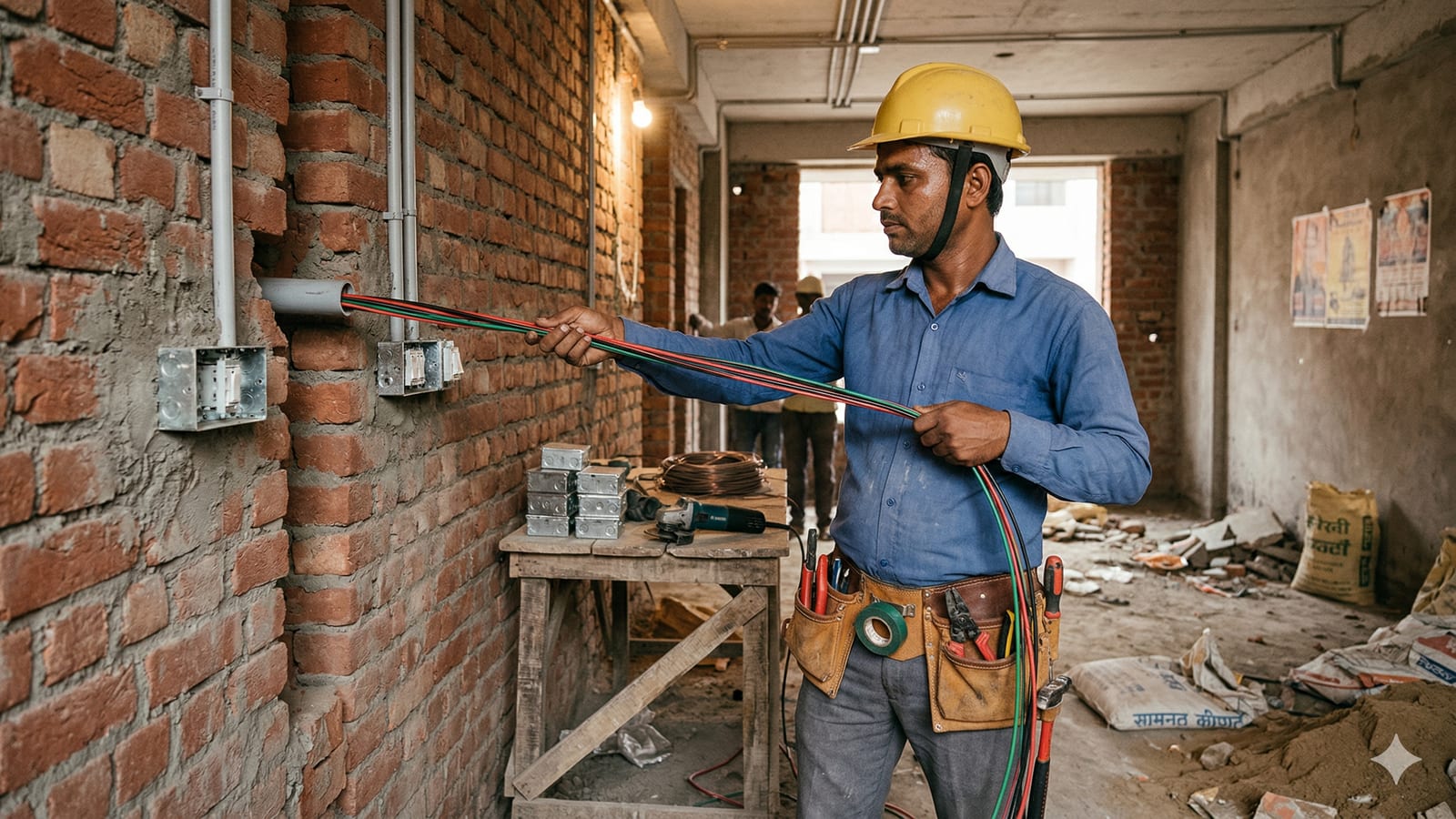
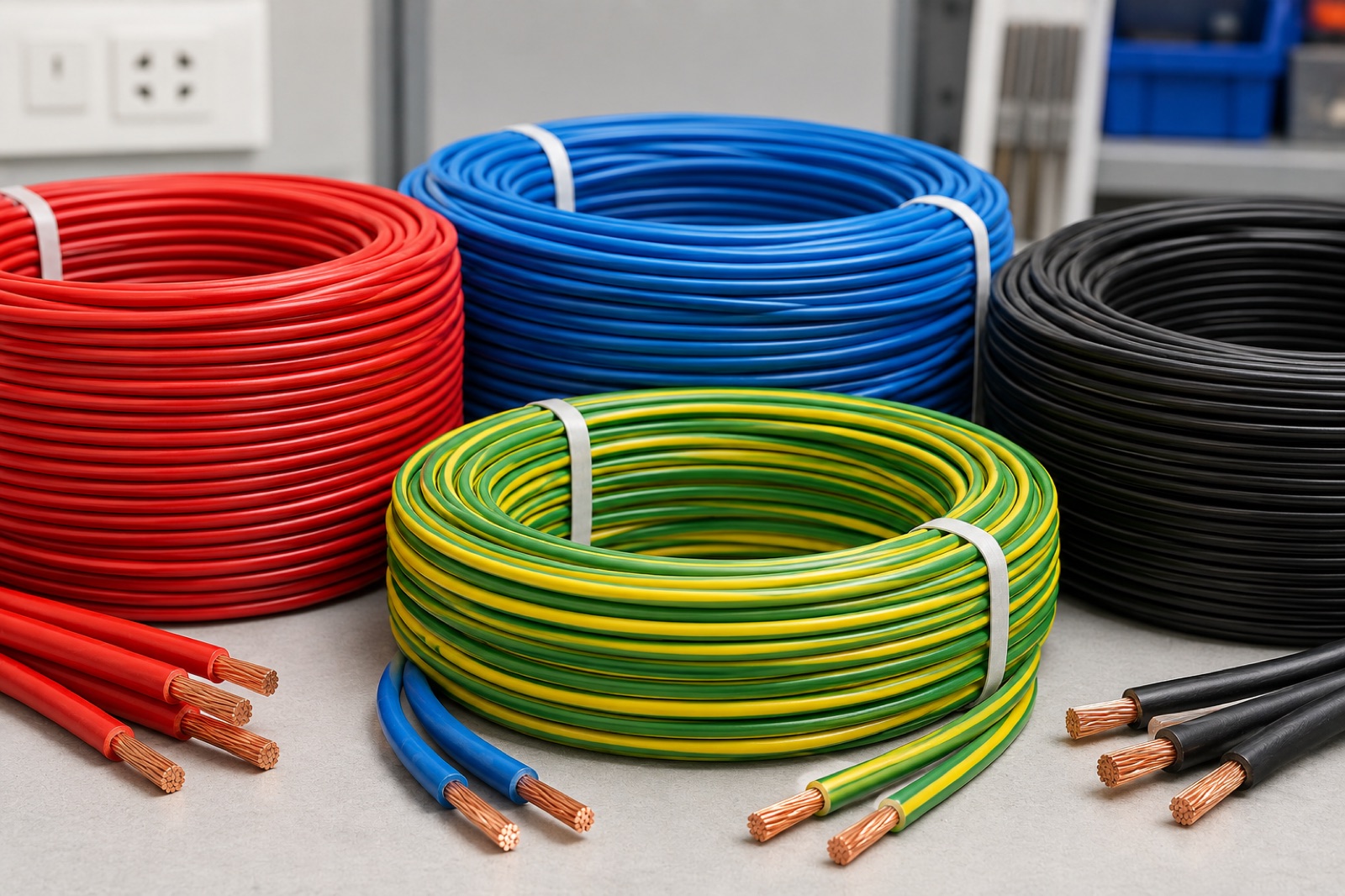
Electrical wiring is where cutting corners is most dangerous: undersized or counterfeit cable is a fire risk that hides inside your walls for years. This guide covers wire sizes by load, copper versus aluminium, the protective devices your board needs, and the safety standards to insist on.
Quick answer: wire size by load
| Circuit | Typical wire size | Examples |
|---|---|---|
| Lighting | 1.0 to 1.5 sq mm | Ceiling lights, fans |
| Power sockets | 2.5 sq mm | General 5A and 15A sockets |
| High load | 4 to 6 sq mm | Geyser, air conditioner, mains |
Wire is sold by conductor cross-section in square millimetres (sq mm). Undersizing a circuit makes the cable overheat, so always size up to the load, never down to the price.
Choosing the right size
The correct size depends on the load current and the cable run length: longer runs need a larger conductor to limit voltage drop. Lighting draws little current, so thin cable is fine; sockets and heavy appliances need progressively larger conductors. Our electrical wire size guide gives the current ratings so you can match each circuit precisely.
Copper vs aluminium
For internal house wiring, copper is the standard: it conducts better, runs cooler, carries more current for the same size and holds up at joints over decades. Aluminium is lighter and cheaper and is mainly used for the incoming service cable and long high-current runs. Inside the home, wire in copper.
Protection: MCB, RCCB and MCCB
A safe distribution board layers protection:
- MCB (Miniature Circuit Breaker) trips on overload and short circuit, protecting the wiring.
- RCCB (Residual Current Circuit Breaker) trips on earth leakage, protecting people from shock.
- MCCB (Moulded Case Circuit Breaker) handles higher loads in larger mains panels.
A home board should use MCBs for individual circuits and an RCCB for shock protection together. Our MCB vs RCCB vs MCCB guide explains how they combine.
Safety standards
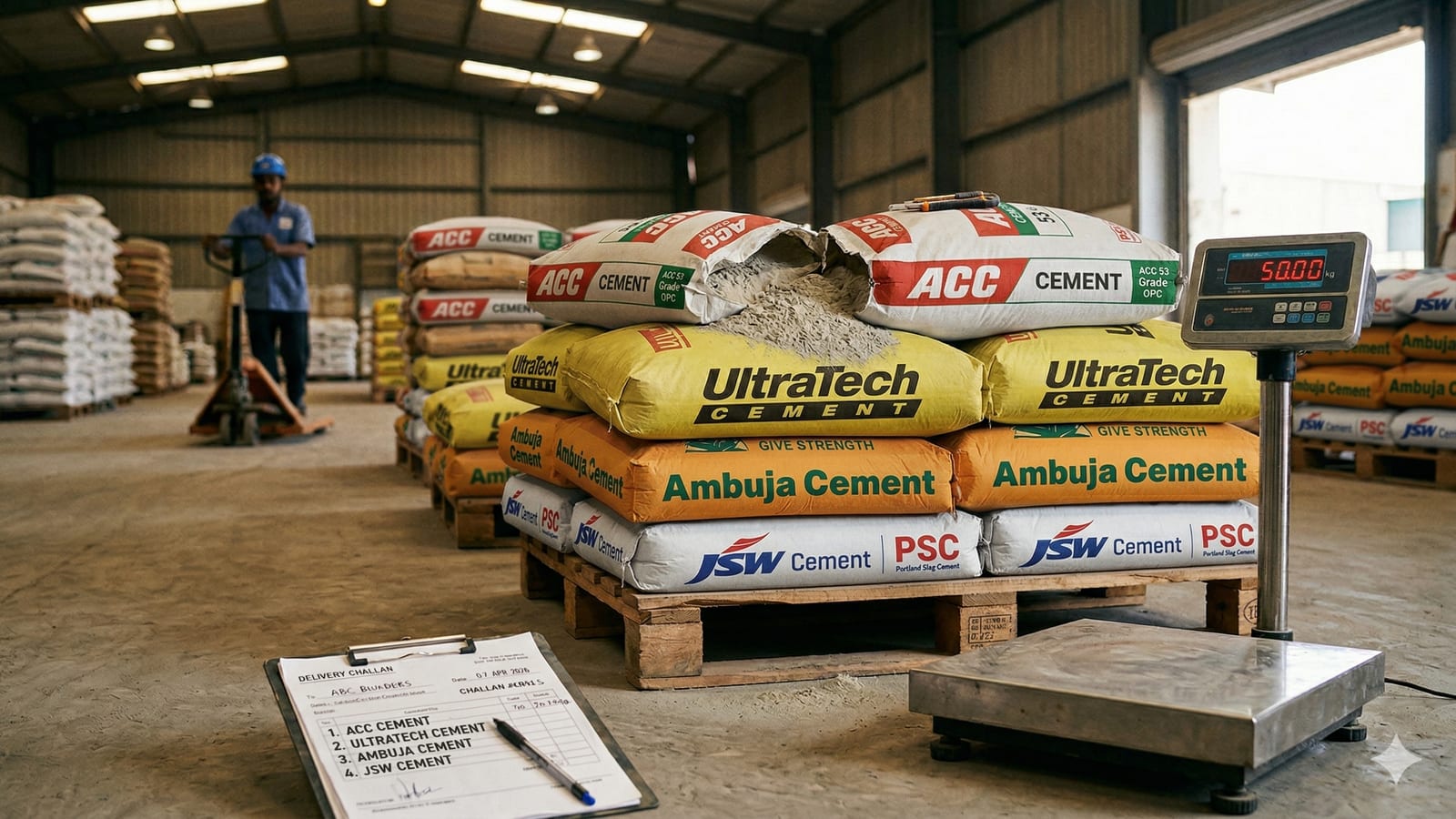
House wiring cable in India should carry the ISI mark and comply with IS 694. Insist on cable with full-size copper conductors, consistent insulation and clear printing of the size and standard. Undersized "economy" cable is the most common hidden hazard, so buy branded.
Wiring your house
Planning the full circuit layout, load balancing and earthing is a job for a licensed electrician. Our house wiring guide for India covers the circuits, materials and safety practices so you can plan the job and buy the right cable and devices, and the electrical wiring cost guide sets out what that job costs, from the per-point rate to a full 1, 2 and 3 BHK breakdown.
Buying checklist
- Size each circuit by load and run length, not by price.
- Use copper for internal circuits.
- Fit MCBs plus an RCCB on the board for both circuit and shock protection.
- Check for the ISI mark and IS 694 on the cable.
- Buy branded cable with full-size conductors from a trusted supplier.
Buy wires and cables on Clyft
Clyft delivers branded house wiring cable direct from manufacturers across Hyderabad and up to 50 km around the city, usually within 24 hours. Browse the wires and cables collection for live options, or order on the Clyft app.