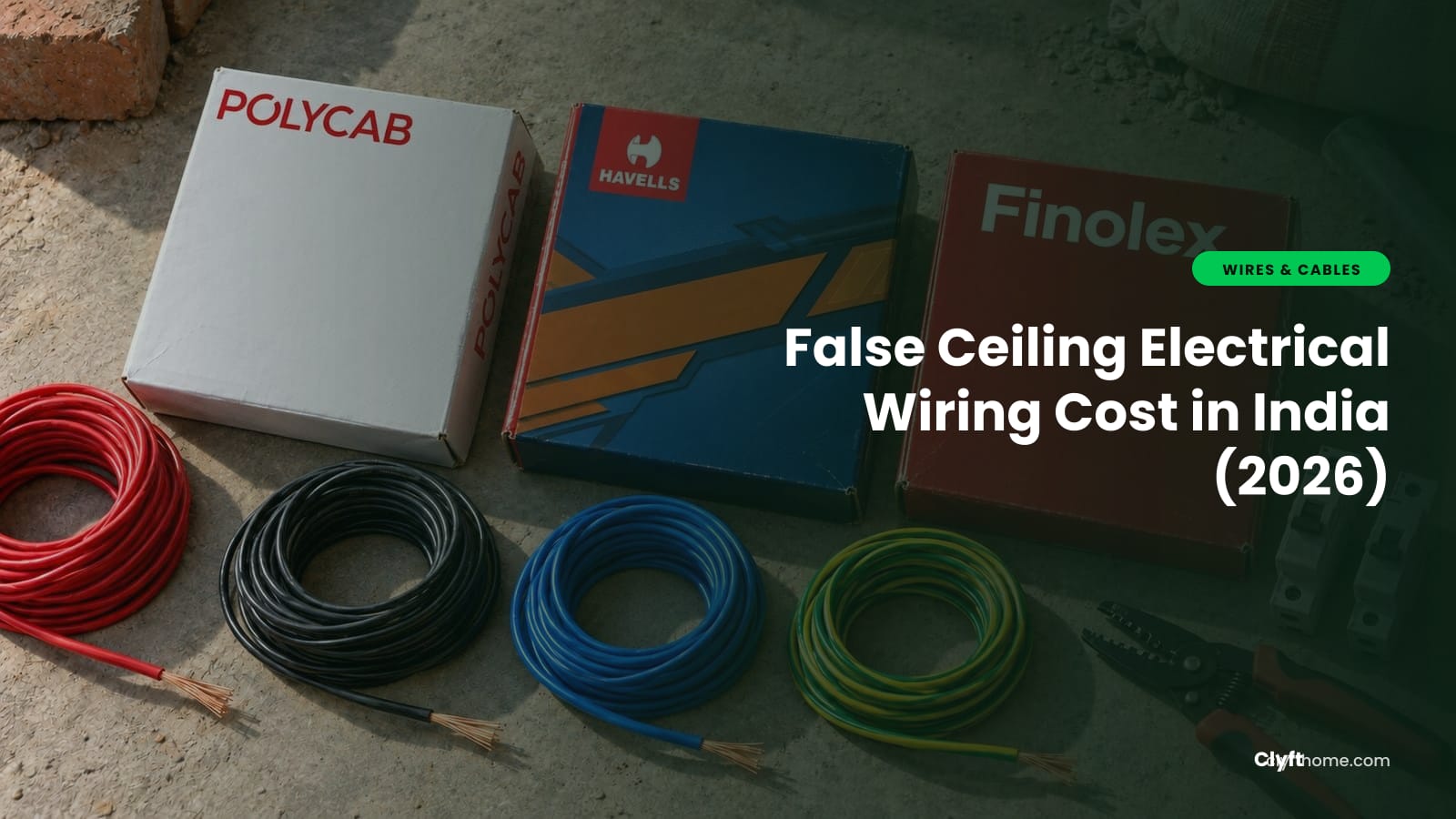
If you are choosing house wiring cable in India, the honest answer is that the brand matters far less than three things printed on the sheath: the ISI mark against IS 694, the insulation grade (FR, FRLS or HFFR) and the conductor size in sq mm. Polycab, Havells, Finolex, RR Kabel and KEI all manufacture to the same national standard, so a genuine ISI-marked 2.5 sq mm FR cable from any of them is a safe cable. This guide covers what actually differs, so you can buy on specification instead of on advertising.
What actually makes one house wire better than another
House wiring cable is a copper conductor inside an insulating sheath. There are only a few places quality can genuinely vary:
- Conductor cross-section. A cable sold as 2.5 sq mm should contain 2.5 sq mm of copper. Cheap cable is often undersized, which means it carries less current than you think and runs hotter. This is the single most important difference and the hardest to see.
- Copper purity and annealing. Building wire uses electrolytic-grade annealed copper. Poor copper is stiffer, harder to terminate and has higher resistance.
- Insulation grade. PVC, FR, FRLS and HFFR behave very differently in a fire. See the table below.
- Consistency. A large manufacturer running tested batches is more predictable than an unbranded coil, which is most of what you are paying for.
Notice that none of these are brand-specific. They are specification items, and every one of them is printed on a genuine cable.
The insulation grades: PVC, FR, FRLS and HFFR
This is the choice that actually changes how safe your home is, and it is the one most buyers skip.
| Grade | What it means | Where it belongs |
|---|---|---|
| PVC (general purpose) | Standard insulation, no flame-retardant additives | Legacy work only, not worth specifying in a new home |
| FR | Flame retardant, resists spreading a flame along the cable | Acceptable minimum for a home |
| FRLS | Flame retardant, low smoke, releases less dense smoke and fewer corrosive gases | The sensible default throughout a house |
| HFFR | Halogen free, flame retardant, lowest smoke and no corrosive halogen gases | Basements, stairwells, enclosed shafts, anywhere escape routes matter |
In a house fire, smoke is what stops people getting out. That is the entire argument for paying the modest premium for FRLS over plain FR across the whole house.
IS 694 and the ISI mark
IS 694 is the Indian Standard for PVC-insulated copper building wire rated up to 1100 volts. It is the specification your house wiring should be bought against, and compliance is shown by the ISI mark.
On a genuine coil you should be able to read the brand, the ISI mark, the IS 694 reference, the size in sq mm, the voltage grade and usually sequential metre markings. If any of that is missing, absent or smudged beyond reading, do not put the cable in a wall you intend to close up.
How the major Indian brands compare
All of the brands below are large national manufacturers producing ISI-marked copper building wire to IS 694. The useful comparison is not "which is best" but what each tends to offer and where it sits on price.
| Brand | What it is known for | Typical positioning |
|---|---|---|
| Polycab | Very wide range across sizes and insulation grades, broad distribution | Premium mainstream |
| Havells | Strong consumer brand, commonly specified alongside its switchgear | Premium mainstream |
| Finolex | Long-established cable specialist, widely available | Mainstream |
| RR Kabel | Full building-wire range including low-smoke variants | Mainstream |
| KEI | Strong in both building wire and larger industrial cable | Mainstream |
Treat this as positioning, not a ranking. For a given size and insulation grade, the meaningful differences between these manufacturers are availability and price, not safety.
What should decide it for you, in order:
- The insulation grade you want is actually in stock in every size your circuit plan needs.
- The coil is genuine, sealed and correctly marked.
- The price per metre, compared like for like on size and grade.
Buying four sizes of FRLS from one brand that stocks them all is better than mixing grades across brands to chase a lower rate on one size.
What sizes you will actually order
Brand choice is only half an order. The other half is the size mix, which comes from your circuit plan:
| Size | Circuit |
|---|---|
| 1.0 to 1.5 sq mm | Lighting and fan circuits |
| 2.5 sq mm | General power and socket circuits |
| 4 sq mm | Geyser, 1 to 1.5 ton AC, kitchen appliances |
| 6 to 10 sq mm | Mains, sub-mains, larger AC and cooktops |
Most homes need all four. For how these are chosen, and why a long run may need one size up, see the electrical wire size guide.
Checklist before you buy
- Decide the insulation grade first, and specify it for the whole house rather than per room. FRLS is the sensible default.
- Check the ISI mark and IS 694 printed on the sheath, not just on the box.
- Buy sealed coils and check the printed metre marking against what you are billed for.
- Match sizes to the circuit plan, not to whatever the shop has most of.
- Never undersize sockets to lighting cable to save on a coil.
- Compare price per metre like for like, same size, same grade, before comparing brands at all.
Buy on specification and the brand question mostly answers itself: pick the manufacturer that stocks the insulation grade you want in every size your home needs, check the ISI marking on each coil, and compare price per metre like for like. Browse ISI-marked copper cable on wires and cables, or see the full catalogue in all products.