Building a house means buying dozens of different materials in the right order, and it is easy to lose track. This checklist organises everything you need by construction phase, from the foundation up to the final coat of paint, so you can plan, budget and order without missing anything. Each phase links to the right Clyft category and to a deeper guide, and Clyft delivers all of these materials to your doorstep.
Construction materials list by phase
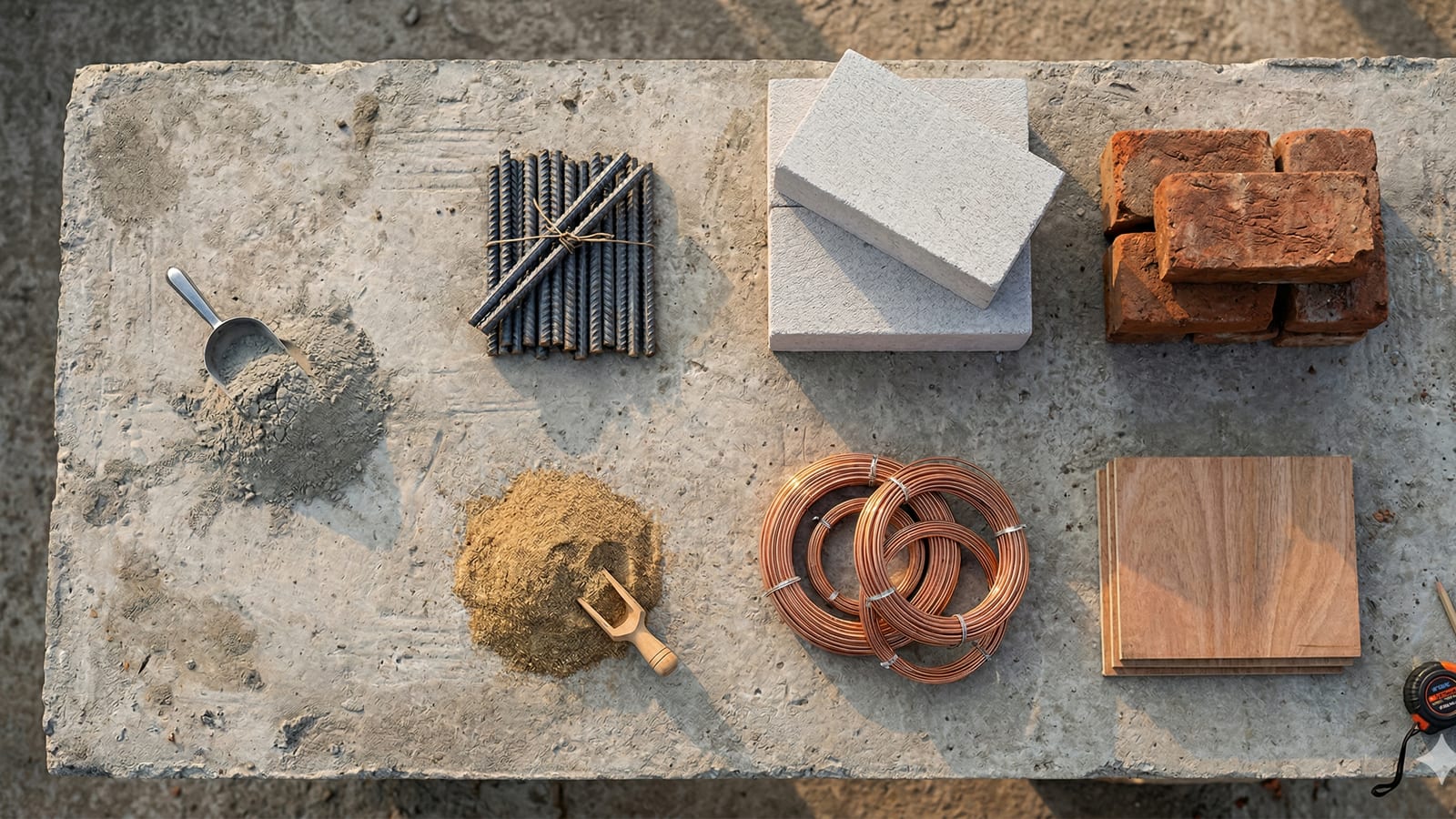
Here is the full picture at a glance. Work down the phases in order, and use the linked categories to check live prices and order what each stage needs.
| Phase | Key materials | Shop on Clyft |
|---|---|---|
| Foundation & structure | Cement, TMT steel bars, sand, coarse aggregate, ready-mix concrete | Cement, TMT steel |
| Walls | Red bricks, AAC blocks, fly ash bricks, cement and sand mortar | Red bricks, AAC blocks |
| Plastering & flooring | Cement, sand, tiles, marble, granite | Cement |
| Woodwork | Plywood, MDF, laminates, doors, hardware | Plywood |
| Electrical | Wires and cables, MCB / RCCB DB board, switches, conduits, fittings | Wires & cables |
| Plumbing | CPVC and PVC pipes, fittings, sanitaryware | All products |
| Finishing | Putty, primer, paint, waterproofing | All products |
Phase 1: Foundation and structure
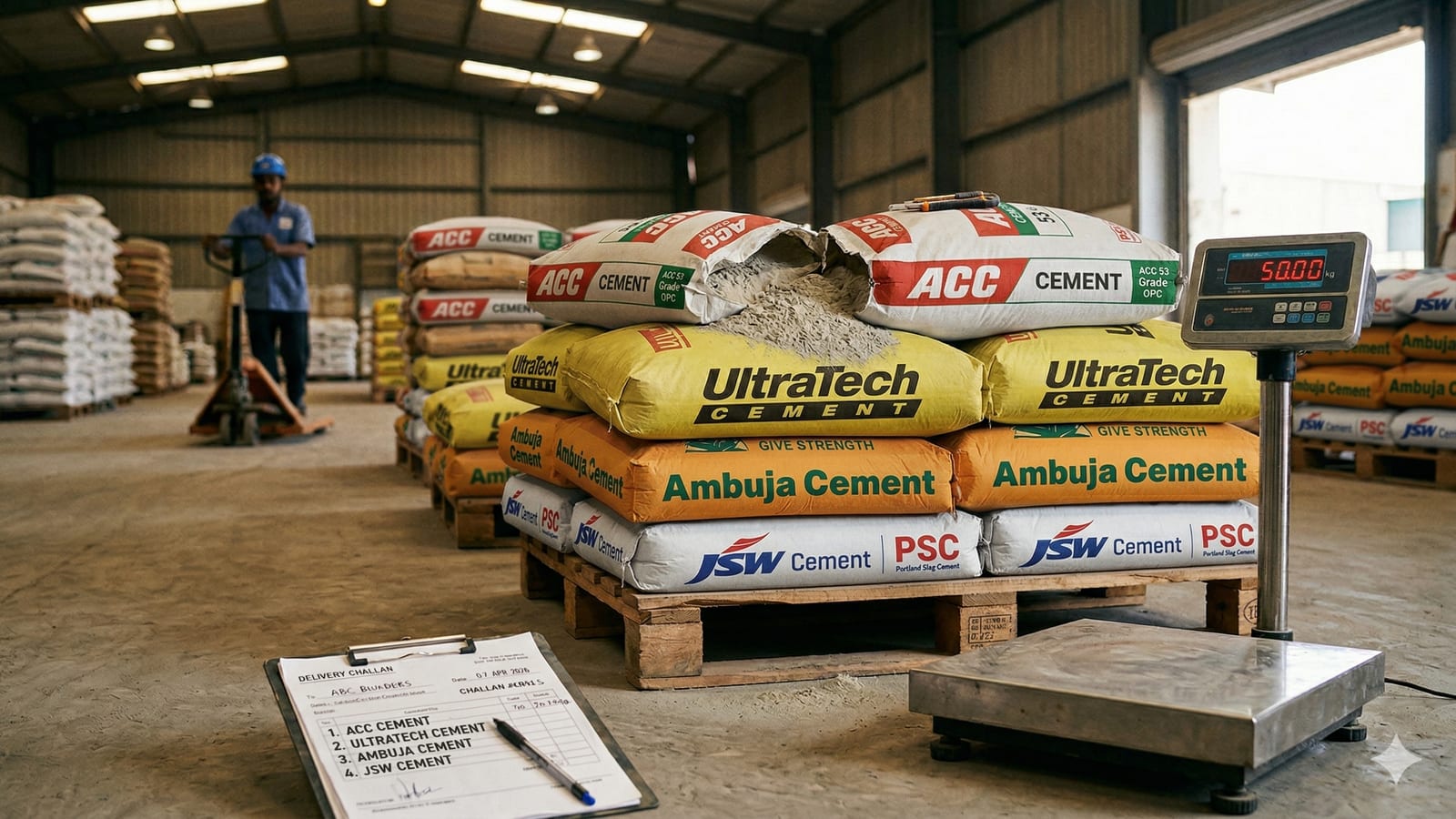
The structure carries the entire building, so this phase uses the heaviest, most safety-critical materials. You will need cement, TMT steel bars, sand, coarse aggregate and, for larger pours, ready-mix concrete. The cement grade and steel grade you choose here decide the strength and durability of the whole house, so buy to specification and from fresh stock. Shop cement and TMT steel bars to compare and order.
Phase 2: Walls
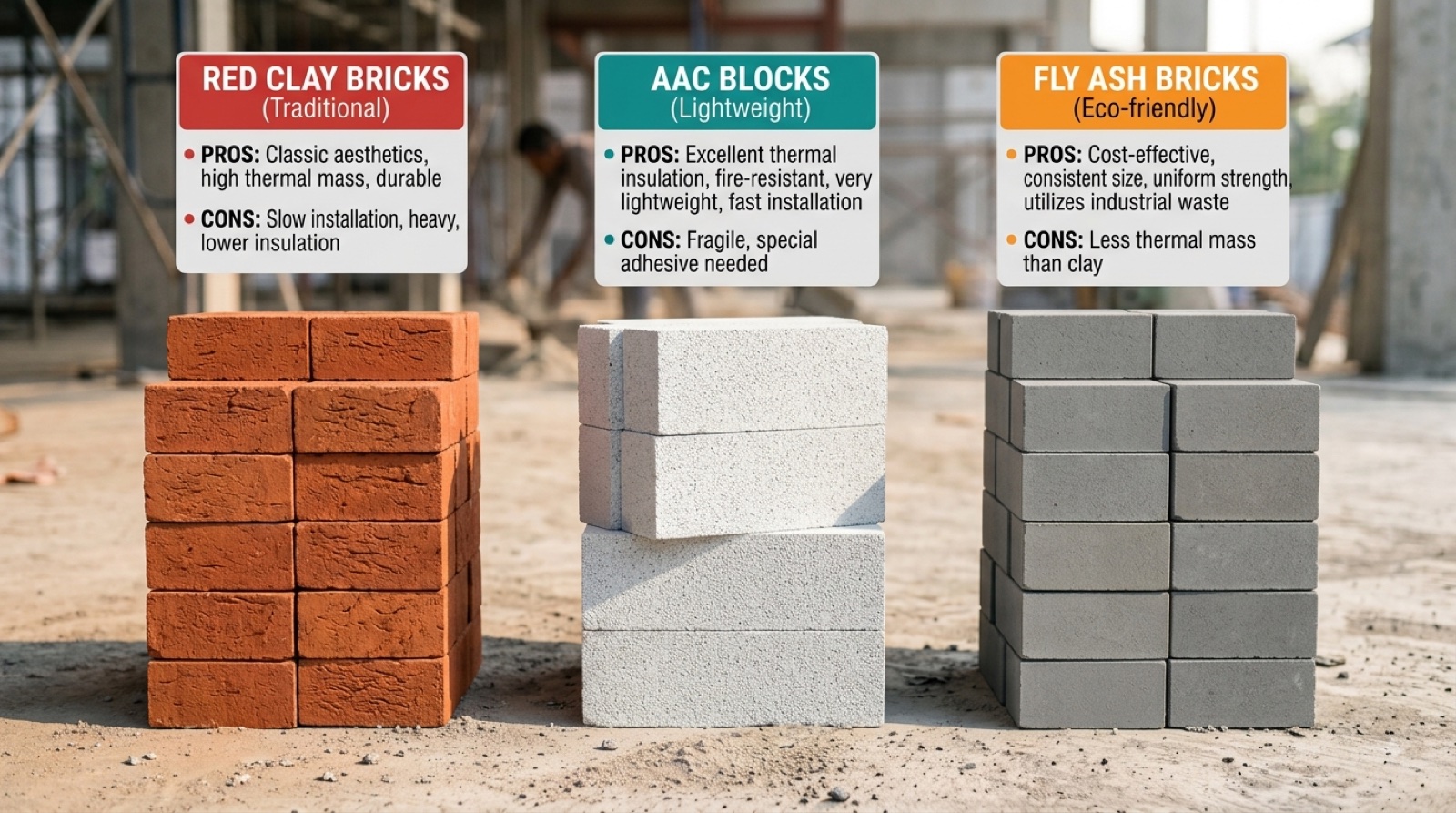
Once the frame is up, the walls go in. The main choices are red bricks, AAC blocks or fly ash bricks, laid in cement and sand mortar. Red bricks are the traditional pick, while AAC blocks are lighter, larger and quicker to lay with better thermal insulation. Your choice affects wall weight, speed of work and insulation, so it is worth understanding the trade-offs before you order. Shop red bricks and AAC blocks.
Phase 3: Plastering and flooring
With walls up, surfaces are plastered and floors are laid. This phase needs more cement and sand for plaster, plus tiles, and marble or granite for flooring and countertops. Good plastering work sets up the finishing coats later, so material quality here matters more than it looks. Cement for plaster is on the cement collection.
Phase 4: Woodwork
Woodwork covers everything from door shutters to modular fittings. Typical materials are plywood, MDF, laminates, doors and the hardware that hangs and locks them. Plywood grade matters a lot in kitchens and bathrooms where moisture is present, so choose the right grade for each location. Shop plywood to compare grades.
Phase 5: Electrical
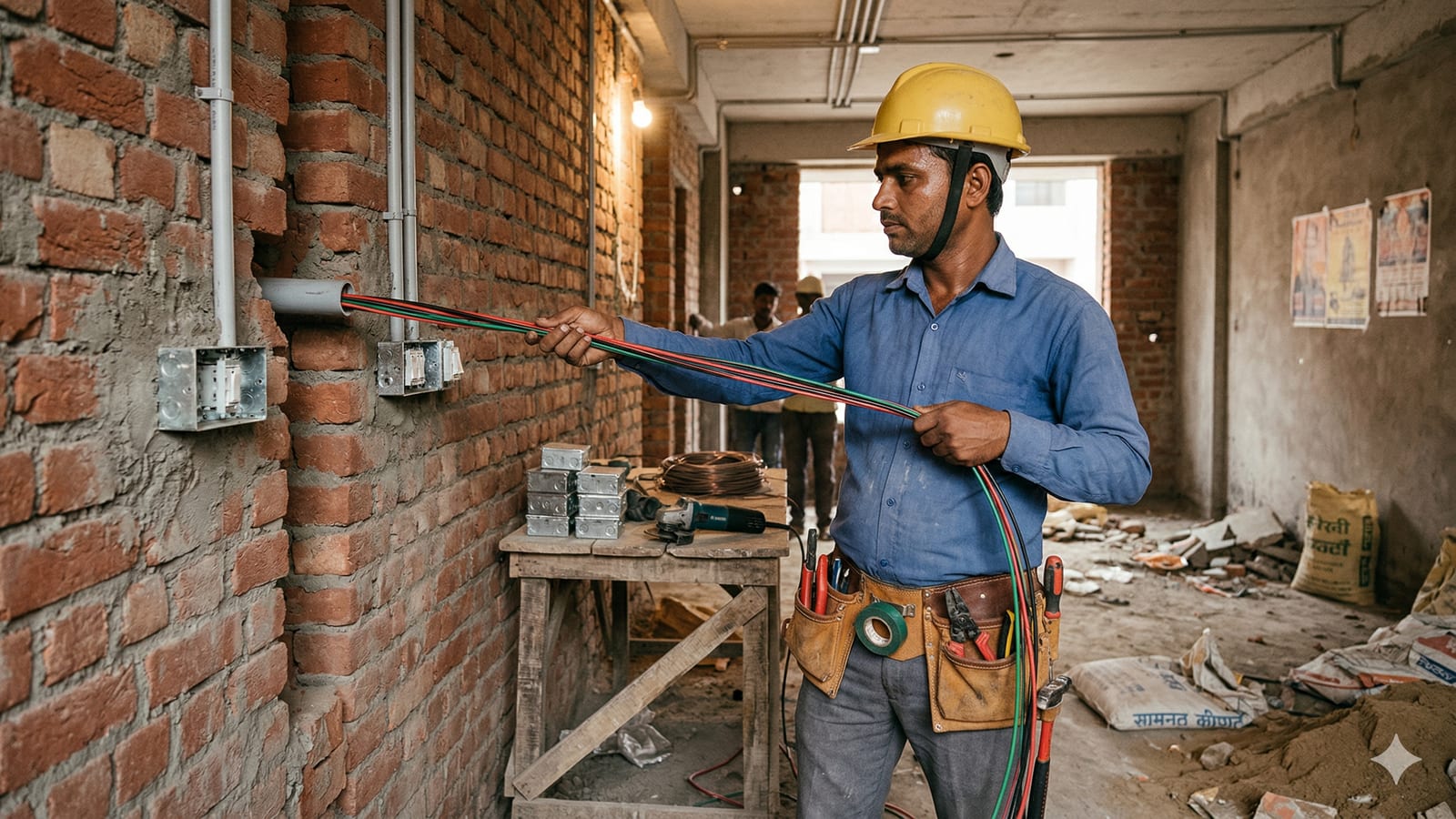
The electrical phase makes the house liveable and safe. You will need wires and cables in the correct sizes, a distribution board fitted with MCBs and an RCCB, plus switches, conduits and fittings. Getting wire sizes and protective devices right is a safety issue, not just a shopping list, so plan the circuits before you buy. Shop wires and cables and read the electrical guides below.
Phase 6: Plumbing
Plumbing runs alongside electrical work. The core materials are CPVC and PVC pipes, their fittings, and the sanitaryware (taps, basins, WCs) that connect to them. CPVC is used for hot and cold supply lines while PVC handles drainage, so match the pipe to the job. Browse the full range in all products.
Phase 7: Finishing
Finishing is what everyone sees. This final phase uses putty and primer to prepare surfaces, paint for the finish coat, and waterproofing for terraces, bathrooms and external walls. Skimping on waterproofing is the mistake that comes back as damp walls a year later, so treat it as essential, not optional. Find finishing materials in all products.
Learn more: guides for every material
Each material has its own decisions to make. These deeper guides walk through the choices, grades and quantities for every phase:
- Cement: OPC vs PPC vs PSC cement, cement price in India and the concrete mix ratio of cement, sand and aggregate.
- Steel: TMT steel grades Fe500 vs Fe500D, steel quantity per sqft and TMT steel price in India.
- Bricks and blocks: AAC blocks vs red bricks and bricks per square metre calculation.
- Plywood: plywood vs MDF vs particle board and plywood grades MR, BWR and BWP.
- Electrical: electrical wire size guide, the house wiring guide for Indian homes and MCB vs RCCB vs MCCB explained.
- Cost: construction cost per sqft in India.
Tips for buying construction materials
A checklist gets the materials right, but a few buying habits keep the quality right and the budget under control:
- Buy to specification, not just to price. Match every material to your structural drawings and the grades your engineer specified. The cement grade, steel grade and plywood grade each change how the finished house performs, so the cheapest option is rarely the right one.
- Check the quality marks. Look for the ISI mark and the relevant IS standard printed on cement, steel, cable and plywood, and check the manufacturing date on cement so you are buying fresh stock rather than material that has been sitting in a warehouse.
- Order phase by phase. Bringing everything to site at once ties up cash and exposes materials to damage, weather and theft. Order each phase as you reach it so stock stays fresh and storage stays manageable.
- Allow for wastage. Add a small buffer over your calculated quantity for cutting, breakage and site losses, especially on bricks, blocks, tiles and cable, so work never stops for a shortfall.
- Estimate before you buy. Convert your built-up area into quantities using standard rules of thumb before ordering, so you are working from numbers rather than guesses.
How to use this checklist
Work through the phases in order, use the linked guides to make the material and grade decisions for each, and estimate quantities from your built-up area before you order. Buying phase by phase, rather than everything at once, keeps your site clear, your materials fresh and your money working in the right sequence.
Clyft delivers all of these materials, cement, TMT steel, bricks, blocks, plywood, wires and cables and more, direct from manufacturers to your doorstep. Browse everything in all products and build your order phase by phase.